
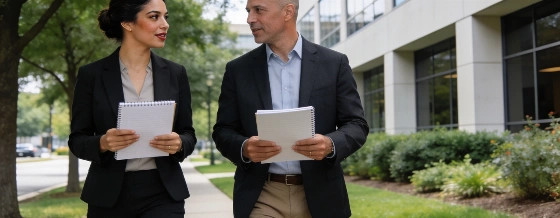
Back-to-back video calls and static office routines are driving up stress and draining creativity. A simple shift—walking meetings—may help break the cycle and restore mental energy
Most American professionals know the feeling: another day, another string of meetings, all spent sitting in front of a screen. The result? Rising stress, mental fatigue, and a sense that creative thinking is slipping away. Jeffrey Davis, a creativity consultant and author, argues that the solution is surprisingly simple—get up and walk during your next meeting. According to Davis, even a short walk can lower mental pressure and spark new ideas, especially when the conversation moves outdoors.
Walking meetings—sometimes called “walking one-on-ones” or “walking brainstorms”—aren’t just a trendy wellness hack. Research from Stanford University found that participants generated 60% more creative ideas during short walking sessions compared to sitting. A 2021 study in the Journal of Environmental Psychology reported that a 12- to 18-week “walk and talk” coaching program reduced burnout and improved mental well-being for 40 participants. The benefits are strongest when the route is green, quiet, and away from heavy traffic, especially for remote workers who may feel isolated or drained by screen time.
But not every stroll counts. Davis emphasizes that walking meetings work best with a few ground rules. First, keep the group small—ideally two or three people. Second, choose a short, safe route with natural light and minimal distractions. Third, start with a clear question or topic to guide the conversation. The goal isn’t to multitask or rush through an agenda, but to create space for open thinking and genuine connection. Even a 10- to 20-minute walk can shift the mood and help participants move from tension to exploration.
According to Psytheater.com, the physical act of walking changes the sensory environment—light, sound, and movement all shift, which can lower the perceived burden of a meeting. This effect is especially noticeable in one-on-one check-ins, quick team huddles, or brainstorming sessions. Walking meetings are less effective for large groups, highly technical topics, or situations that require screens or detailed documents. It’s also important to consider physical ability and weather conditions when planning a route. For teams new to the practice, Davis suggests starting small: notify your colleague in advance, pick a short, quiet path, open with a focused question, and end with a clear action step. For leaders, this approach can also help foster psychological safety and reduce the pressure to have all the answers, as explored in this analysis of leadership questions that protect mental health.
Recent data from the U.S. Bureau of Labor Statistics shows that American workers now spend an average of 21.5 hours per week in meetings, up nearly 10% since 2019. Meanwhile, Gallup’s 2023 State of the Workplace report found that 44% of employees experience frequent stress at work, with burnout rates highest among those with little movement or variety in their routines. These numbers highlight the urgent need for practical, evidence-based strategies to reduce stress and support creativity in the workplace.
Walking meetings are just one example of how small behavioral shifts can have a measurable impact on mental health and productivity. The science behind movement and creativity is robust: physical activity increases blood flow to the brain, supports divergent thinking, and can help break habitual thought patterns. For organizations, encouraging walking meetings may also signal a broader commitment to employee well-being and adaptive work culture.
Creativity in the workplace is not just about brainstorming or innovation sessions. It’s about building environments—physical and psychological—where people feel safe to share ideas, challenge assumptions, and recover from setbacks. Walking meetings offer a low-cost, accessible way to disrupt the monotony of office life and invite fresh thinking. As more companies experiment with flexible work models, the simple act of walking together may become a key tool for reducing stress and unlocking new solutions.
Burnout is a complex phenomenon, distinct from ordinary stress or fatigue. It involves emotional exhaustion, cynicism, and a reduced sense of accomplishment, often triggered by chronic workplace demands and lack of control. While walking meetings alone won’t solve systemic issues, they can be a practical step toward healthier routines and more resilient teams. For those struggling with persistent stress or signs of burnout, consulting a licensed mental health professional remains essential.