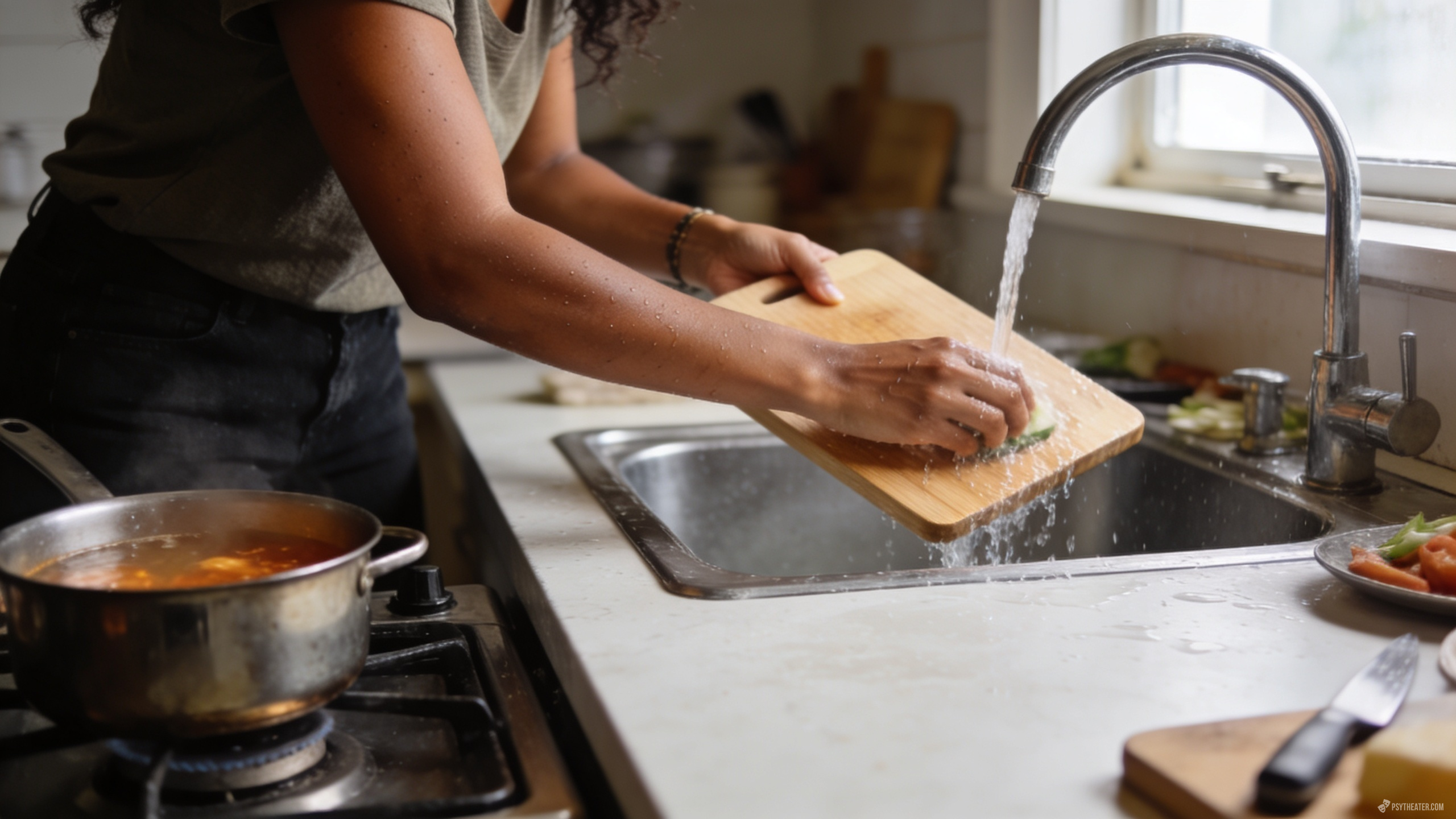
In American kitchens, the divide is clear: some people clean as they go, while others let dishes pile up until the end. This isn’t just a matter of preference or upbringing. According to the National Institutes of Health and the American Psychological Association, the habit of cleaning while cooking taps into the brain’s executive functions—those mental skills that help us plan, prioritize, and juggle tasks. Environmental psychology research shows that visual clutter can spike cortisol, the body’s main stress hormone. As reported by Marmiton, people who clean as they cook can cut their total cleanup time by up to 40 percent, simply by making use of small pauses during meal prep.
Chefs call it “clean as you go,” but for many home cooks, it’s a quiet strategy for keeping chaos at bay. This approach isn’t about being obsessive or controlling. It’s a sign of a mind that can anticipate future mess, manage distractions, and stay focused on the bigger picture—even when the kitchen is busy and the mental load is high. In a world where multitasking is the norm and mental fatigue is real, this small habit can make a big difference in how we experience daily routines.
Cleaning as you cook means rinsing a cutting board while onions sauté, wiping up a spill before it dries, or putting away spices as soon as you’re done with them. These micro-actions engage working memory, mental flexibility, and self-control—the same skills that help us meet deadlines, keep promises, and manage stress. The American Psychological Association notes that people who can delay gratification and resist distractions often make better long-term choices, both in and out of the kitchen. Choosing to wash a pan instead of scrolling your phone while dinner simmers is a subtle but powerful way to invest in your future self.
This habit also reflects a personality trait psychologists call conscientiousness. People who clean as they go tend to finish what they start, stick to schedules, and follow through on commitments. That doesn’t mean a messy kitchen signals a lack of creativity or intelligence—far from it. But the impulse to tidy up in real time is one indicator of a structured, forward-thinking mind, not a test of IQ or worth.
Importantly, you don’t need to become a cleaning fanatic to benefit from this approach. Setting up your kitchen before you start—emptying the sink, filling a basin with soapy water, and keeping a compost bin handy—can make it easier to clean in small bursts. Each pause in the cooking process becomes a chance to tackle a quick task, reducing the final mess and easing the mental load that comes with facing a mountain of dirty dishes after dinner.
According to Marmiton, these small adjustments can make the end of a meal feel less like a chore and more like a relief. The payoff isn’t just a cleaner kitchen, but a calmer mind and more energy left for the rest of your evening.
Executive function is a set of mental skills that includes working memory, flexible thinking, and self-control. These abilities are crucial for managing daily life, from organizing tasks to regulating emotions. People with strong executive function often find it easier to adapt to change, resist distractions, and recover from setbacks. While these skills can be strengthened through practice and routine, they’re also shaped by genetics, environment, and life experience. Understanding how habits like cleaning as you cook reflect and reinforce these abilities can offer new insight into the ways our brains shape our everyday choices.