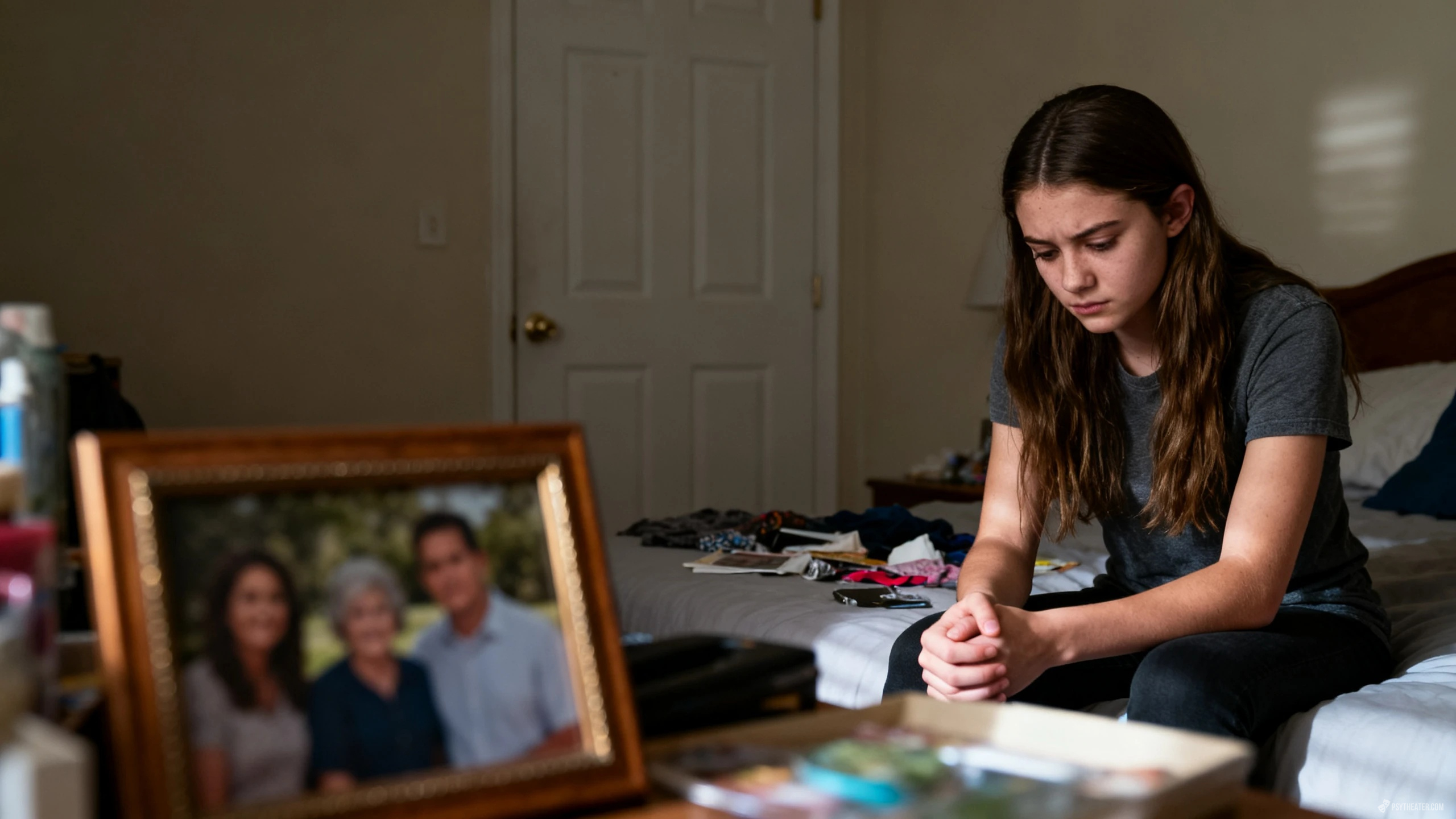
At 19, Emily finds herself at a crossroads most of her friends can’t imagine. Her parents are pushing her toward an arranged marriage—one that promises stability, not love. She’s spent years feeling invisible in her own life, her choices made for her, her voice drowned out by family expectations. She’s studying to become an OB-GYN, not because she chose it, but because her parents decided it was the right path. Her real dream? Psychology. But in her family, dreams are often set aside for what’s practical, respectable, or expected.
Emily’s relationship with her parents is complicated. She barely speaks to her father, and trust with her mother is thin. She’s grown up learning to doubt her own instincts, to question whether her desires matter. Now, as the wedding approaches, she’s caught between fear and the faint hope that she might still carve out a life that feels like her own. The pressure is relentless, and the stakes feel impossibly high. According to Psychologies.ru, Emily’s story is not unique—many young adults face similar crossroads, especially in families where tradition and reputation carry more weight than individual happiness.
Therapist and logotherapist Tatiana Sorokina sees strength in Emily’s struggle. The very fact that Emily still knows what she wants, even if she’s afraid to claim it, is a sign she hasn’t lost herself. Sorokina suggests a practical approach: separate the limits that truly can’t be changed right now from those that are more flexible. Some family rules may be immovable for the moment, but others can be challenged or worked around. The key is to recognize which is which, and to accept that everyone has some constraints—what matters is how you respond to them.
For Emily, that means taking a hard look at her reality. What’s actually stopping her from pursuing psychology, or from saying no to the marriage? What would the fallout be, and what might she gain? Sorokina recommends breaking big, overwhelming problems into smaller, manageable steps. Each small act of self-assertion—whether it’s voicing an opinion, setting a boundary, or making a minor decision for herself—can build confidence over time. The process is slow, and setbacks are likely, but progress is possible.
Family pressure to conform can leave lasting scars. Young adults raised in environments where autonomy is discouraged often struggle with self-doubt, anxiety, and a sense of powerlessness. The urge to please parents can be so deeply ingrained that even small acts of rebellion feel dangerous. But as Sorokina points out, the presence of fear doesn’t mean you’re weak. It means you’re aware of the risks—and still willing to imagine something better.
Emily’s story is a reminder that the path to selfhood is rarely straightforward. It’s shaped by culture, family, and the invisible rules that govern our lives. For those facing similar pressures, the first step is often the hardest: admitting what you want, even if you’re not sure how to get it. From there, it’s about finding allies, seeking support, and taking one small step at a time toward a life that feels authentic.
In the world of therapy, the struggle for autonomy is a common theme. Many clients arrive in the therapist’s office burdened by family expectations, unsure where their parents’ dreams end and their own begin. Treatment often focuses on helping individuals identify their own values, set boundaries, and tolerate the discomfort that comes with change. The process is rarely quick, but it can be transformative. Over time, people learn that it’s possible to honor family ties without sacrificing their own sense of self.