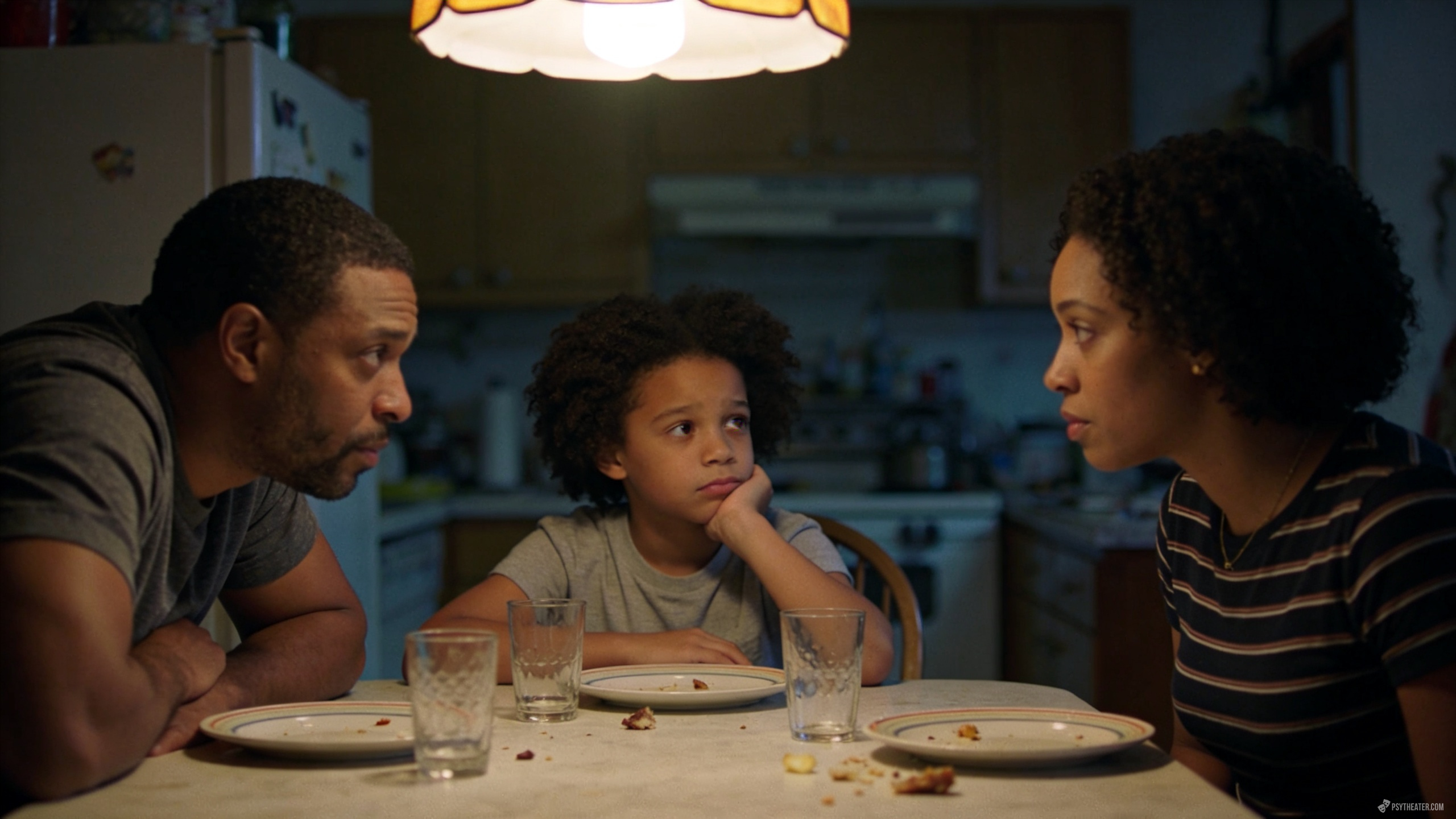
Emily noticed something odd about her husband, Mark. He could disappear right in front of her—sitting on the couch, remote in one hand, phone in the other, eyes fixed on the TV but not really watching. The room would fill with the flicker of screens, but Mark barely moved. Just minutes earlier, they’d been arguing about dinner, money, and his habit of saying “in a minute” when that minute had long since passed. Emily’s words came fast, fueled by frustration. Mark tried to respond at first, then went quiet. His face settled into a blank, almost passport-photo stillness.
Emily’s anger spiked. “Can you at least say something?” she demanded. Mark blinked. That was it. She felt invisible, as if he was deliberately erasing her. Here was a grown man, playing at being furniture. But inside Mark, a different calculation was running. He knew himself: one more word and his voice would turn sharp. Emily wouldn’t remember what he said, only how he said it. The fight would spiral—tone, then last fall, then her birthday, then the wrong flowers. He saw the route and wanted off at the first stop.
Mark had learned early: in conflict, silence was safer. His father rarely spoke, but when he did, the chill lingered for days. His mother cried in the kitchen, banging cups. No one explained anything. The family pretended nothing was wrong. Mark grew up, bought sneakers, a credit card, a gym membership. But his way of fighting stayed the same. When tension peaked, he muted himself—afraid of saying too much.
Emily didn’t see that fear. She saw a man who went silent while she hurt. So she pressed harder, asked sharper questions, demanded answers now. For her, a response meant connection. For him, answering now meant risking a blowup.
Ten minutes later, Mark finally spoke: “I’m angry and I don’t want to say something I’ll regret. Give me half an hour, I’ll come back.” The words were clumsy, almost mechanical. Emily half-laughed through tears—it sounded like he was filing a support ticket for their marriage. But for the first time that night, she realized he planned to return.
Half an hour later, Mark came to the kitchen. He sat beside her, took a glass of water, and admitted that in fights, words vanish for him—but not feelings, not the wish to stay close. The words get stuck somewhere between his chest and his mouth. Emily listened. Her anger was still there, but it no longer ran the show.
They didn’t suddenly start having perfect arguments. Mark still went quiet sometimes. Emily still flared up fast. But now they had a rule: name the pause out loud, and say when you’ll be back. If he needed silence, he’d tell her when he’d return. If she got scared, she’d ask about timing instead of launching an interrogation.
Therapists working with this kind of silence focus on the moment before the shutdown: the physical tension, the fear, the expectation of attack, the old family script. The work is to stay present in conflict, not vanish or turn a partner into an enemy. Silence after a fight is rarely empty. It’s often packed with shame, anger, fear, and old survival tactics that once made sense but now just keep people apart.
According to Psytheater.com, these patterns are common in couples where one partner learned early that words could be dangerous. The silence isn’t about not caring—it’s about not knowing how to stay in the room when things get hard. Naming the pause and agreeing on a return time can help both partners feel safer, even when the words are hard to find.
In therapy, clinicians often see shutdown responses—sometimes called “stonewalling”—in couples where conflict triggers old wounds. This isn’t always a sign of indifference or manipulation. For many, it’s a learned defense against escalation or emotional overwhelm. Treatment may involve building awareness of physical cues, practicing brief time-outs, and learning to reconnect after a pause. Over time, couples can develop new scripts for conflict that allow both partners to stay present, even when the conversation gets tough.